
Schema resynchronization
When a provider updates an interface, connected consumers can apply the new interface version through schema resynchronization.
This allows a module connection to evolve without being recreated from scratch.
Schema resynchronization is useful when the provider has:
- added new fields,
- removed fields,
- changed relationships,
- updated calculated fields,
- exposed additional logic.
What happens during resynchronization
When an update is available, the consumer can review the changed interface and apply the new version.
During this process, Ninox compares the existing connection with the updated interface. It keeps valid mappings where possible and highlights elements that need review.
This makes the update process more transparent and reduces the risk of accidental breakage.
Why this is important
In productive systems, module interfaces often change over time. Without resynchronization, even small schema changes could require manual rebuilding of the connection.
Schema resynchronization allows systems to evolve gradually while preserving the stability of existing workflows.
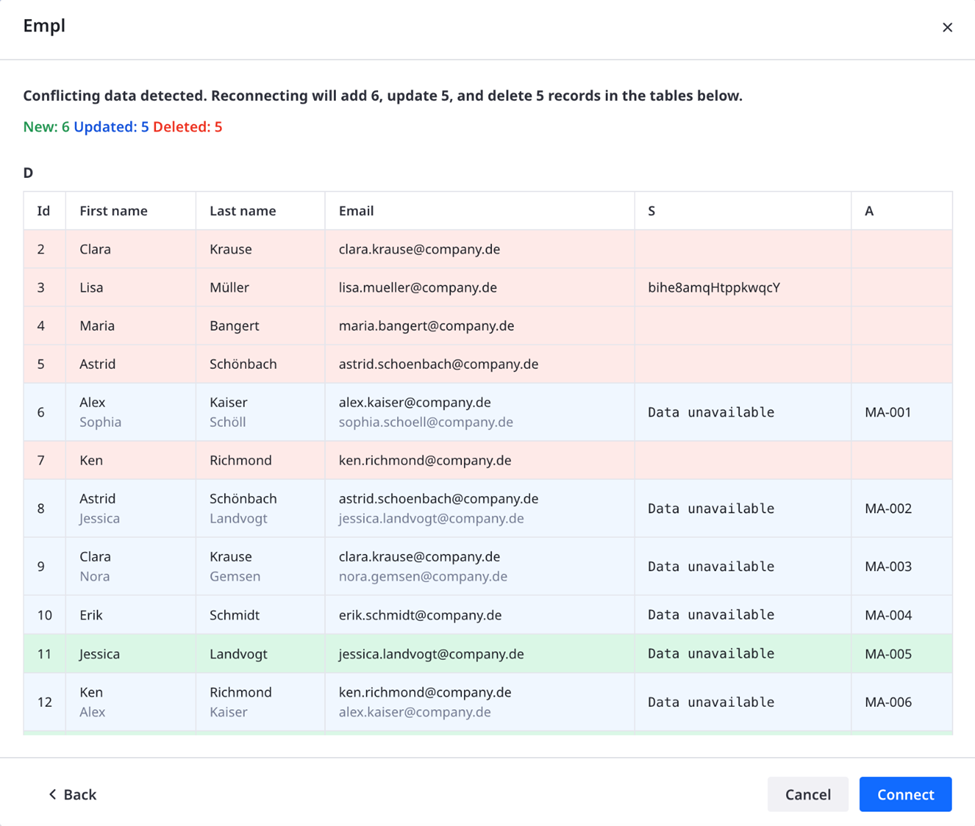
If conflicting data is detected during reconnection, Ninox shows a preview of the changes before the connection is applied. This helps you review added, updated, and deleted records before confirming the sync.